


Important Facts About 1 Carat Diamonds
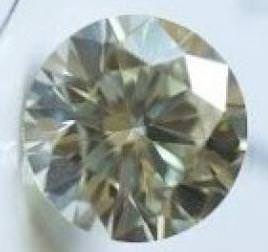
While a 1-carat diamond may sound like something small to you, any jeweler will tell you that there are many things you can do with it. How big is a 1-Carat Diamond? First, let us understand how big a 1-carat diamond really is. A diamond’s carat is essentially its weight. 1 carat is 200 milligrams, which sounds tiny but it is actually bigger than it sounds. The actual size will differ depending on its shape and cut. Here are the approximate sizes for the different shapes: This makes it the perfect weight for nearly every jewelry piece, from earrings and rings to pendants and bracelets. The round cut diamond is one of the most popular shapes and has 57 facets (58 with a culet). Like all polished diamonds, there are 4 main parts: the table, crown, girdle and pavilion. The table, which is the top flat section of the diamond, has one facet. The crown is the angled area surrounding the diamond and that has 8 bezels, 8 stars, and 16 upper girdle facets. The pavilion, which is the bottom part under the crown, is made of 8 pavilions and 16 lower girdle facets. All together, not including 1 facet for the culet at the very bottom, that makes 57 facets. Diamond Prices Greatly Vary Even for a “small” 1-carat diamond, other factors such as the cut, color, and clarity influence the diamond’s price so there is not one standard price for a diamond of this weight. For example, the price for a round 1-carat diamond with a brilliant cut, D color, flawless clarity and that is well proportioned and excellent cut is estimated at a little over $20,000 retail. Most jewelers will sell a pair of 1-carat earrings or a ring for much less than that, which means that the clarity, cut and color are of lower quality. 1 Carat Diamonds are the Most Popular Choice 1 carat diamonds are sold most often internationally and are the popular choice by many jewelers and traders due to their size and price, which makes them easier to sell in jewelry. Most people have a certain budget in mind when shopping for jewelry, and in most cases, this budget is under $15,000. This makes 1-carat diamonds more appealing to both buyers and jewelers. Certification is Still Important! When it comes to diamonds, certification is always important. Just because a diamond is “small” or is purchase in a piece of jewelry, from a jewelry does not make its certificates any less important. While other factors come in to play when purchasing jewelry, such as the other materials involved, the GIA certification of a diamond will give you a better idea of the quality you are getting and if it is really worth the price you are paying. The average wholesale price for a 1 carat diamond that is GIA certified can range anywhere between $1,000 and $20,000 so this is very important. Moti Israeli’s diamonds are all GIA certified and can be purchased for wholesale prices.
Four Facts that Prove Israeli Diamonds are Better

Diamonds can easily be purchased online these days, especially with the highly secure websites that various international diamond exchanges make available to buyers. Even so, how do you choose the right provider and diamond exchange? You may be surprised to learn that the Israeli Diamond Exchange is very popular among diamond brokers around the world and serious buyers and traders prefer to purchase Israeli diamonds for several reasons. 1. GIA Certification Certification and proper reporting is always necessary, but it becomes even more important when purchasing online since buyers cannot inspect the product themselves. Israeli diamonds purchase from reliable retailers such as Moti Israeli and the Diamonds Bursa are known for their GIA certification. The GIA, Gemological institute of America, is considered one of the most reliable diamond laboratories in the world due to their many years of experience and the fact that they are completely independent. GIA certification includes every important factor that diamond buyers need to know about a diamond, giving you an exact idea of what you’re buying and what it’s worth. All in all, GIA certification ensures that you know exactly what you are buying and allows you to make your purchase with confidence. 2. Advanced Encryption Technology Because diamond retailers and exchanges deal with very large exchanges, online purchases must be done over a highly secure and encrypted website. The Israeli Diamond Exchange and certified Israeli diamond retailers benefit from the advanced encryption technologies available in what is known around the globe as the “Start Up Nation”. Israel is the source of many technologies available around the world today and is a world leader in advanced encryption and online security. 3. International Standards Israeli diamond retailers and the exchange must uphold both strict Israeli standards and the international trade rules of the WFDB, the World Federation of Diamond Bourses. This means that every factor from the etiquette of the people involved to the information available on the website is in line with international standards. Diamond buyers around the world benefit from reliable and international suppliers in Israel while still benefiting from unique and certified diamonds. 4. Reliable History and Industry The diamond industry in Israel is one of the largest and most prominent in the world and has, over the years, developed into an international diamond trade center. Today, it is a big part of Israel’s economy and the import and the Ministry of Economy supervises export of diamonds in Israel. When you buy Israeli diamonds from a reliable wholesaler, like Moti Israeli, you are getting top quality products that are certified and abide by the highest and strictest international standards.
4 C’s of Loose Diamonds
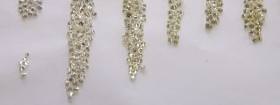
How to Choose Loose Diamonds A diamond is like a house, there are palaces, mansions and cottages but they are all considered to be your home. So too a diamond is the expression of your heart but they also come in any size, shape, colour or quality you can imagine. The diamond industry in order to make conformity across the globe developed a system to classify diamonds known as the four C’s. *Please check out our loose diamonds inventory. Carat weight The first stands for the Carat weight, five carats is equivalent to one gram and the origin of the word comes from the seeds of the carob tree; one carat is divided into 100 points and so a half carat stone is written as 0.50 ct. There is no standard size for diamonds, amongst some of the largest gems is the Cullinan II weighing 317.4 carats and it is currently the fourth largest polished diamond in the world. It is today set in the Imperial State Crown, part of the British Crown Jewels, belonging to the Queen of England. In Western society it is traditionally common that one carat stones of differing qualities are used for engagement rings but frequently smaller stones are used with more fanciful settings and very often cluster rings are given where there are multiple diamonds set in a jewel where each individual stone can weigh as little as 0.02 carats. Clarity The second is Clarity, employs a scale to determine the inclusions and approximate place of them within a stone. The scale of acceptable quality diamonds ranges from internally flawless (IF) through to very very slightly included (VVS) and very slightly included (VS) to slightly included (SI) with sub-divisions within these grades. These categories usually require 10 x magnification to see the flaws. There are lower qualities where the inclusions are visible to the naked eye but usually when giving a diamond to express your love, the grades used are those listed above. It is obvious that any inclusion whether they are white or black will interfere with the rays of light passing through the stone, the higher the grade the less interference. Colour Is an extremely important factor, the finest white is called a D and going down the alphabet reaching H are still called grades of white but the scale goes even further through faint yellow and browns till it reaches Z. These colours and their descriptions are true within natural daylight or its equivalent but very often a diamond set in a yellow gold jewel and worn with colourful clothes and exhibited in artificial light is extremely hard to determine its true colour. Higher colour grades are proportionately more expensive and it is worthwhile considering lower grades within the white colours to get better value for money. The last C representing the cut Is in our opinion the most important, the mathematics of a perfect cut ensure that the physical properties of the diamond will refract and reflect the maximum amount of light giving it that romantic sparkle that makes the diamond the King of the gemstone world. Even a D colour stone that is internally flawless will not have that vivacious appeal if the cut fails to bring out that hidden life that lies within the stone. The cut is the only one of the C’s that is induced by man, all of the other attributes are naturally found within the diamond, it is the human factor that creates the beauty of the diamond and as much as an artist determines the outcome of any work so does the diamond cutter and polisher with his experience and understanding of the given colours and clarity skilfully affect the visual effect of a stone. *Please read here our full guide dediceted for people who have an interest in buying loose polished diamonds. Compare the prices for several weight categories of diamonds.
How A Diamond Color Effect On It’s Value
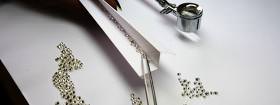
Diamond Color Chart If you will ask your friends what the color of a diamond is, most people would say it is white. The fact is that the rarest and best diamonds are colorless. If you ask what kind of stones are known as colored stones, most people will probably say that only precious stones or gemstones such as Emerald, Sapphire, Ruby, Topaz and so on are known as colored stones. They would be right, but not completely. There are colored diamonds, but they are in a category of their own, called fancy colored diamonds. Diamond Color Scale The scale that is used to grade the color of diamonds is based on the A, B, C alphabet, but it starts with the letter D. D color is the highest color for a diamond, it is very rare in nature and for this reason it is the most expensive diamond. The difference in color between D to E and to F is not much, and an unprofessional person will not be able to notice it, unless he has all types of stones ones next to the other to make a comparison. The diamond color scale was invented many years ago by the GIA – Gemological Institute of America, and it was decided to begin the scale from the letter D (and not A) purposely, in order to be sure that this scale is different from the scales which were used at the time. How does it work? D-F Colored Diamonds As mentioned before, diamonds of D, E and F colors are called colorless stonesThis means they don’t have even a slight yellow shade. The diamonds in this group are the most expensive stones, yet even among them there are vast differences in prices. For example – 1 carat clean diamond, of D color is priced at USD 15,900, E color at USD 11,300, while an F color diamond would cost USD 9,600. As you can see, if you want to set a diamond of this group in your white gold or platinum engagement ring, the difference in the color will not be noticed if you set an F colored stone instead of a D colored one, and you can save USD 6,300. G-H-I-J Color Diamonds This group of diamonds is called near colorless. In this group too, most people will not notice the color difference among the stones unless they are compared to one another.This group can be divided into 2 sub-groups; G- H and I – J The fact is that there is a slight difference between H to I, and of course to J – in which it is obvious to notice a very slight yellow tint. If you plan to set your diamond in a classic white gold or platinum ring, I would recommend you not to go below the H color, and if you can afford it – buy a G colored stone – it will be much nicer. Just bear in mind that a 1 carat, good clarity H colored stone would cost USD 5,000 and a G colored stone would cost USD 5,500 – not much of a difference. If the engagement ring you want to buy is of yellow gold, you can choose an I or J colored stone since the jewelry is of a yellow color.In this case, also, if you can afford it – pay little bit more and go for the I colored stone. K-L-M Colored diamonds This group is of diamonds that have a slight yellow tint, which can be easily observed with the naked eyes. Since these stones are commonly found and widely available in stores, their prices are significantly lower than the previous groups. Please be aware that many jewelry shops do not hold this group of diamonds in their inventories. If your mind is set on a yellow gold ring, you might find it worth your while to have a lower budget for bigger a diamond. N-O-P-Q-R Colored diamonds This is a rather large group of low colored diamonds.There is very little demand to diamonds of this group, and their prices are the lowest in the market. Most of the Far East customers, especially from the Philippines, are people looking for high clarity stones while having a low budget, and are interested in these group of diamonds, since the price they willing to pay is extremely low. S-T and U-V to Y-Z Colored diamonds This group of diamonds are called light yellow colored diamonds, and they are in more of a demanded in the market. One of the reasons for this is that with a little change in the stone proportions by re-polishing it, it is possible to improve the color of the stone and it can become a fancy colored diamond. Fancy colored diamonds have extremely higher prices those of the light colored stones. Fluorescence stones About one third of the Decorative diamonds in the world give back a tint of blue light when they are under a florescent / ultra-violet light. These stones are called fluorescence stones, and are graded starting with feint blue, all the way up to very strong blue. Stones that do not give back any blue light are called none fluorescence stones. So, How can the color chart be used to save you money? The color of a diamond is one of the 4C’s that can be used to get an estimation of the diamond’s price. As mentioned, the rarest diamond is of D color (colorless), and if you follow the diamond color chart, you will find that the price gets lower for the same size and clarity of the diamond. An E colored diamond will be cheaper than a D colored one, and an F colored diamond will be cheaper than an E colored one, and so on… Please look at the chart below to see how the diamond’s price changes according to its color: The prices and colors are for a 1 carat diamond of VS1 clarity, an excellent cut and none fluorescence. By looking at the chart you can see that a 1 carat D
9 Most popular diamonds shapes
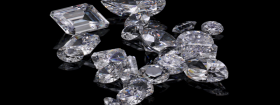
The Various Diamonds Shapes Diamonds are a fancy item that is highly demanded by women and men throughout the world. The reason for this is their special shine, the beauty of diamonds shapes, the fact that they preserve their financial value, and the fact that it symbolizes for the owner of the diamond jewelry the fact that he upgraded his social status. The diamonds that are set in the jewelry are the final product of a raw material that is billions of years old, and which was mined throughout the world from the depths of the earth. After the mining process, the raw diamond is transformed through the polishing process into the sparkling and familiar diamond that we all know, and a few of us hold in our possession a personal collection of jewelries that have diamonds set in them. We can find in the nature the raw diamonds in a variety of shapes. Some of them are long as bottles, and some are squared and in a rhombic shape. The main role of a professional polisher of diamonds is to polish the diamond while losing the least possible portion of the diamond’s weight in the process. Today, there are advanced computer programs that are able via lasers that scan the raw diamond to find a number of options to cut the diamond according to certain shapes and according to the maximal exploitation of the weight of the diamond, while losing as less as possible weight in the polishing process. There are many diamond shapes. In this article we shall show the most common ones. The Round Shape A round diamond has 57 facets. There are 32 facets in the upper part of the diamond and 25 facets in the lower part of the diamond.Another name for the round diamond is a brilliant cut diamond. The round shape is the most popular and most sold shape amongst all of the diamond shapes. About 85% of the shapes of diamonds that are set in jewelry are round diamonds. In the beginning of the 20th century a Russian scientist named Marcel Tolkowsky discovered that if you polish the diamond according to a certain physical and mathematical model then the coefficient of the light refraction is the largest because the rays of light shall illuminate the diamond in the most optimal way. The Princess Shape The princess diamond is the most famous square shaped diamond.The princess cut diamond combines two different techniques. The first one is the step cut and the second one is the brilliant cut. The combination between the techniques grants the diamond a lot of cuttings in many angles that turn it into a very sparkling diamond. The shape of the princess diamond is the second most popular after the round diamond. The princess diamond is a shiny square with sharp and uncut edges. The Emerald Shape The emerald diamond has a rectangular shape. Inside the diamond the flaws are seen more easily, therefore it is recommended to purchase a diamond that has a high level of clarity. The cutting of this diamond is also characterized by steps, and therefore it is also called a step cut. This diamond has 50-58 facets. Despite the fact that the emerald cut diamond is less shiny and less sparkling than other diamonds, it is very popular due to its unique vintage design. Its emphasis on the clarity and color turn this cut into an ideal one for whoever wants to demonstrate the high quality of the stone. The Oval Shape The oval shape is an elongated shape that has 56 facets in different proportions in the parts of the diamond. This shape is actually a combination of a round diamond and an emerald diamond in such a way that combines together the advantages that are in these two separate shapes. The oval shape was invented in the 1960s by the American diamond corporation “Lazare Kaplan”. The oval shape especially fits women with thin fingers that do not want a wide diamond like the round diamond, but are interested in the shine and glamour of the round cut. The color and clarity of the diamond are factors that influence the price of this diamond shape, and the ratio between the width and the length of the diamond also has a large influence on its price. The length of the diamond needs to be 1.5 up to 1.7 times larger than the width of the diamond. Every deviation from the customary proportions shall substantially decrease the shine of the diamond and its value. The Marquise Shape The marquise is a shape that has existed for many years. It was invented in France and it became very popular over the years. The marquise has an elongated shape that its ideal ratio is 1:2, which means that the length of the diamond has to be two times bigger than its width in order that the diamond would shine in its maximum form. A diamond that is cut via the marquise cut needs to be sharp, shiny and in the shape of a boat. The elongated and narrow shape of the marquise creates an illusion of a diamond that is bigger than other diamonds that weigh the same but have other shapes. Its fancy and unique shape makes it stand out and be the center of attention. When the marquise shaped diamond is set in a ring, its elongated shape makes the fingers seem thin and long. The Pear Shape The diamond that is cut in the shape of a teardrop is also known as a diamond in a “pear” cut. This diamond is exquisite and very popular because of its unique shape, which is perfect for setting such a diamond in a large variety of jewelry, starting from rings and up to pendants and earrings. The shape of the teardrop has 58 facets throughout its length and its width. The exact ratio between the width and the length of the diamond is 1.6, meaning that the length of the diamond will be 1.6 times larger
Diamonds Investment Guide
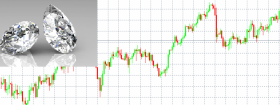
After the subprime disaster and with economic uncertainty, investors are looking for low-volatility investments. Diamonds are less volatile, as they are resistant to speculation by the financial community, so there are no derivatives or tradeable products and no short selling is possible. The above quotes only confirm that diamond investments have become an unquestionable and serious element of our investment portfolio. We all agree that to invest in diamonds is a term so broad that without specifying the type of diamond, it is comparable to investing in stocks without indicating the category. At these times that we learn to appreciate the benefits of physical goods. This is why we see the increase in value of gold, silver, platinum and recently, also of white and naturally colored diamonds.Using diamond investments as a financial protection is rapidly growing in recent years and the reasons for that is quite clear Other commodities such as real estate, gold, and silver are investment products against inflation. On the contrast, diamonds are more durable and are movable property. This is also the reason buying diamonds as an investment is always a good thing – to have part of your investment portfolio as diamonds Diamonds have always been good to transit. The fact that such a small item can be worth so much money, and a diamond that is worth a million dollars can easily be kept in a small safe. Diamond is the hardest material on earth, therefore it is not required to worry about anything happening to it. All that must be done is not to lose it, and for this reason it is very important to insure it. A diamond is a physical product that can be held, looked at, and even worn. It can make the investor feel safer – unlike shares and financial securities, which are merely lines on a computer screen. Investing in diamonds should be a part of your portfolio along with other investment, even as a small portion of the investment portfolio. The idea is actually quite simple. Investing in diamonds is based on the fact that diamonds are physical goods. As such they can be bought easily anywhere, even online. My recommendations are basic guidelines on how to invest and buy diamonds. With that, it is very important to take into account the risks, which is why it would be better to continue to read my recommendations. Since diamonds do not wear out and there is no reason to sell them, they can be embedded in a piece of jewelry and be worn while they are used for investment purposes. A basic lesson Learn the language of diamonds. Start with the 4C’s http://www.moti-israeli-diamonds.com/Understanding-Diamond-Prices Set a budget Keep in mind that it should be a part of your investment portfolio. True, unlike bonds, the initial amount needed is a little higher, but that’s no reason to go for a higher budget in the investment portfolio. Compare prices The price of diamonds is different than that of stocks. It is not defined by thousands of buyers and sellers in the international stock markets. However, with a large number of wholesalers and online retailers you can easily compare similar diamonds and their asking price. Diversify the diamond type of the portfolio Do not buy just one diamond in the amount you budgeted. If the decision was to invest in diamonds, for example $ 30,000, you should consider buying three or even four diamonds not of the same type (i.e. different sizes and qualities) because you do not know what kind of diamond will decrease or increase it value when you want to sell it. Know what you are buying. Buy only diamonds which are documented. Remember that every little change of the diamond’s properties means a lot of money. I would highly recommend buying diamonds with the GIA certificates. It is the best known gemological laboratory and one you can rely on its findings. Other than the matter of buying diamonds as an investment, when the time comes to sell your diamond, a buyer would be willing to pay an appropriate price if you present the GIA certificate Buy your diamonds cheap I do not mean for you to buy cheap diamonds, buying it from a retailer means you buy your diamond after a lot of brokers who received their share did. By purchasing cheap we do not mean to buy cheap diamonds (vice versa). This means buying as high up the distribution chain as you can.Skip brokers. Try to buy directly from manufacturers. Many diamond manufacturers have online stores and are gladly willing to sell directly to end customers like you. Just make sure to stick to my advice on how to buy diamonds online. Do not be shy Ask lots of questions. Try to reach diamond experts and consultants. Use the diamond community, social networks are full of people who are very happy to help. Some of them have already invested in diamonds and will share some of their personal experience Price transparency While commodities such as gold or silver can have their price checked anytime on the Stock Exchange, the Rapaport Diamond Price List is available, which most diamond professionals trust. However, this is not enough, even if you can get a copy of it, it would not be useful for a number of reasons. The price list takes into account only the fundamental factors of weight, clarity and color. But in the end, the price is set by the market. With supply and demand it is possible to buy some diamonds above and below the list price, a difference of 10% means a lot. Also, this list refers only colorless diamonds and there is no current list for colored diamonds – which we will write about separately. The only way to overcome this drawback is to do a lot of research, buy from a reputable dealer known as fair, and make online comparison. Lack of merchantabilityBuying diamonds is relatively easy. However, selling is a whole different story. There
Diamond Jewelry
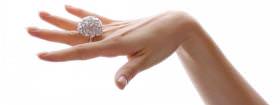
Our Diamond Jewelry Service In the recent years, we have gathered extensive experience in selecting diamond jewelry.We work alongside trusted Israeli jewelers who create quality gold and platinum jewelry for us at wholesale minimal prices. Jewelry History Gold and diamond jewelry are mainly considered a type of decoration, which we wear, especially when going to a gala event. Jewelry previously served as a religious symbol, these days still Christians tend to wear a cross-shaped jewelry piece, while Jews tend to wear jewelry shaped like the Star of David. In previous years jewelry also served as a dowry for before a wedding and a symbol of a union between two families in some cultures. Diamond jewelry was more common among the upper class in order to shine a spotlight on their wealth. In history, the first evidence of wearing jewelry can be found in Egypt, where gold and precious stones as jewelry was first used. The ancient Egyptians were known for their love of expensive products and rare metals. Nowadays, there is use of a wider range of metals as jewels, the rarer the metal or stone embedded in the jewelry is considered, the higher the value of the jewelry. Rare and expensive jewelry have become a significant sign of empires, and later to a mark of the wealth of the upper class. In the past wearing jewelry with diamonds symbolized the social status or the level of wealth of the person wearing it, but unlike those days, today jewelry is accessible to almost all people, no matter what the social status is or how wealthy they are. The great variety of jewelry and the variety of materials of which the jewelry is made, allows every person to express himself and his own unique taste. There is no doubt people will always want to wear jewelry for the above-mentioned reasons. Diamond Jewelry Diamond jewels are a woman’s best friend, very few women can stand before the temptation of beautiful diamond jewel. There is no doubt that it is a gift that can melt the heart of any woman, even the toughest one. But what makes a diamond jewel so attractive and beautiful? Many do not know this, but the CUT of the diamond is what makes all the difference, without the diamond’s special CUT, the diamond itself would look like any other standard gemstone, and sometimes even uglier. But once the diamond is cut into a certain shape, polished professionally the right way and is embedded into a piece of jewelry, a magnificent piece of jewelry is received. The calculated price of diamond jewelry includes the weight of the gold, jeweler wages and the cost of the diamond itself. Even today, when the round diamonds are the most popular, the CUT is the most important thing in determining a diamond’s beauty, and the beauty is emphasized even more when the diamond is adjusted to the jewelry design and they are harmoniously integrated with one other. So when passing by a jewelry store and we see a diamond jewel we cannot remove our eyes from, it’s probably a harmonious combination of design and professional jewel diamond setting. Diamond jewelry prices Diamond jewelry prices are not cheap and it is necessary to examine what can be purchased in the planned budget, what is the desired diamond size, level of cleanliness and its color. A diamond ring or diamond jewel is always a great gift, whether it be a holiday or birthday gift, or just something, to treat your partner, it is always worthwhile to check the option of a high-quality diamond studded jewelry. Among the not-so-simple decisions, we have to make before a marriage proposal is, of course, choosing the perfect ring. There are so many things to understand in the world of diamonds and jewelry, so much so that we are afraid to buy a ring or a diamond that will be of poor quality, and we will end up paying more than they are worth, and there is always the fear of not choosing something in our partner’s personal taste. Therefore, when we get to that big moment, we use the knowledge of friends and people who have already been in this place and have successfully passed it. The first thing we need to pay attention to is the quality of the diamond we choose for the engagement ring. The diamond polishing quality grades range from excellent, very good, good, reasonable and bad. The degree of polishing represents the glow and lightning of the diamond, which in fact, are the qualities that make a diamond special and beautiful. The recommended levels for the purchased diamond are excellent and very good, so that the purchased diamond will have an excellent reflection and an impressive look. The color is perhaps the second most important element when choosing an engagement ring and it is very important that we coordinated with the preferences of our future fiancée. In order to suit her personal taste, it is recommended to look at the jewelry she normally wears, and see if she prefers wearing jewelry of white or yellow gold. In this matter, you can also ask your fiancée’s good friend. As for the design of the ring itself, it can also be chosen from a wide variety of designs – some with a thinner ring, while others will be of a slightly thicker design, with a different style of setting of the diamonds, such as diamonds all around the ring or just along a part of it. Your Diamond engagement ring Another important parameter when buying a diamond ring is the size of the future fiancée’s finger. To match the ring size, secretly try to look at other rings she wears, and estimate the size, you can always go into the nearest jewelry store with one of here rings and to know what its size is. It is better to be accurate with the ring size, and avoid the need to amend the ring later. However, it would be better if the ring size is slightly larger
The Benefits of Buying Israeli Diamonds

The WFDB (World Federation of Diamond Bourses) was founded in 1947 as a way of providing a common set of trading practices and standards to diamond and precious stone bourses around the world. One of the largest and most popular diamond bourses in the world is the Israel Diamond Exchange in Ramat Gan. Diamond traders and dealers around the world purchase their diamonds and precious stones in Israel due to the many advantages and benefits of the Israeli bourse. Technologically Advanced When you buy Israeli diamonds, you’re buying from one of the largest, most popular, and most technologically advanced diamond exchanges in the world. In general, Israel is known for being the “Startup Nation”, a country filled with advanced technologies that find their way to public and private corporations around the world. This influences every large organization in the country, including the diamond exchange, providing you with a system that is highly secure, easy to use and navigate, and extremely advanced. Strict Security The Israel Diamond Exchange is located in Ramat Gan, taking up four high towers in the city. Strict security protocols cover all areas inside and around the building, including every entrance to each building, floor, and over a hundred offices. Detailed Information When it comes to buying diamonds, especially online, having easy access to every detail is crucial. Because the Israeli Diamond Exchange caters to diamond and precious stone buyers around the world, buyers can access invaluable information about the diamonds available, the bourse, including its history and policies, and even the names of leading Israeli diamond exporters, jewelers and traders. Diamonds with GIA certification provide potential buyers with detailed information about the diamonds, including size, grade, color, and more. Buyers can simply fill out a form indicating the type of diamond they’re looking to buy and are shown diamonds relevant to their search with detailed information about each diamond. GIA Certification Israeli diamonds are known around the world for their reliability. Diamond traders in the Israeli Diamond Exchange sell diamonds with GIA certification from the Gemological Institute of America, one of the oldest and most respected independent laboratories in the world. International Regulations As part of the WFDB, the Israeli Diamond Exchange must abide by international trade rules. This includes the etiquette and conduct of all its members, employees, and partners as well as the execution of legal rulings in the event of any rule violations. It’s no wonder that over many people from around the world visit the Israeli Diamond Exchange every month to purchase Israeli diamonds for both personal and business use. General Information About Israeli Diamonds Israeli Diamonds as an industry has created one of the most important and largest diamond centers in the world. This is not only as a major polishing center but also as an international trading focal point for both rough and polished diamonds. Its history starts at the turn of the century, passes through the British Mandate period, the Second World War, the War of Independence and several subsequent wars. Financially it has seen periods of crises in the wake of world economic turmoil and times of boom and expansion. Its growth has been to override these crests and falls using its creative skill and technology in providing a combination of price and quality, attractive to the international market of diamond jewellery. There are several organizations ranging from labour, merchant and manufacturers associations to institutes providing sophisticated technology. The government realizing the importance of the diamond industry to the economy has over the years taken an active role and ensured regular supply of rough, the efficient flow of imported and exported stones and a banking system that has allowed for the flexibility needed to accommodate the peculiarities of the trade. It has encouraged a local diamond jewellery industry, the establishment of an impressive museum and an active tourist participation, all of which have helped in the promotion and expansion of Israel as an international diamond centre. More on this subject: Israel Diamond Exchange Diamond Certificates
Synthetic Diamonds
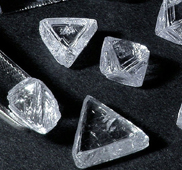
Synthetic diamonds are those created or grown in a laboratory by a crystal growth process, atom by atom. The term usually means imitation, artificial or fake but in this case the content of the stones produced are made from pure carbon as are natural geologically formed diamonds. There are two main methods employed, one is a physical process known as HPHT, using high pressure and temperature and the other is a chemical method known as CVD (chemical vapor deposition) using a hydrocarbon gas mixture. Diamonds in any form have either industrial or cosmetic applications. Synthetic diamonds are used mainly as abrasives and in cutting and polishing tools. Today electronic applications of synthetic diamond are also being developed. It is thought that 98% of industrial grade diamond demand is supplied with synthetic diamonds. The properties of synthetic diamond depend on the details of the manufacturing processes; however, some synthetic diamonds (whether formed by HPHT or CVD) have properties such as hardness, thermal conductivity and electron mobility that are superior to those of most naturally-formed diamonds. Synthetic diamonds can be cut into gems and various colors can now be produced in addition to clear white. These fancy color diamonds are available in brilliant yellow and golden yellow hues, and have the beauty and color of their mined equivalents at more attractive prices. They can also be obtained in brown, blue due to the presence of boron, green and orange. Due to the high price of mined diamonds, the ability to produce gem-quality synthetic diamonds threatened to undercut the business of mined diamond producers and measures were taken to protect the regular trade. De Beers developed spectroscopic devices and techniques to distinguish synthetic and natural diamonds and promoted natural diamonds as superior, in addition to attempting to fix the price of synthetic diamonds. Gem-quality diamonds grown in a lab are hard to distinguish from natural mined stones and can be chemically, physically and optically identical. De Beers offers a tester that employs UV fluorescence to detect metals found in synthetic stones. One manufacturer of laboratory-grown diamonds etches the letters “LG” (laboratory grown) on its stones followed by a serial number. Two positive factors are found in lab-grown diamonds the first is less damage to the environment. The second relates to “conflict” or “blood” diamonds and as the origin of synthetic diamonds is known and guaranteed, there is no need for any apprehensions regarding this matter.
Diamond History
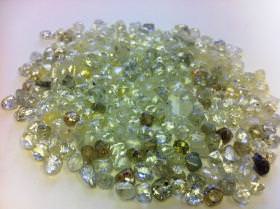
Cecil Rhodes, the famous British colonist realised upon the discovery of a large South African mine that the diamond business needed to be consolidated which he promptly did by controlling the mining of diamonds. This led to the foundation of the De Beers Company; the name De Beers taken from two brothers who owned the farm on which the Kimberley mines were discovered. The brothers are long forgotten but the name De Beer lives on as one of the world’s biggest and well-known companies, still controlling the majority of the diamond market. The evolution of the industry has come a long way but the structure, control and continued success of it owes its gratitude to the founders and their foresight. Africa shows more than anywhere else the role diamonds play in bringing real benefits to people around the world wherever diamonds are sourced. Because this valuable commodity has been used to finance warfare, governments together with the diamond industry have worked to tackle this issue. In 2002, they established the Kimberley Process Certification System, a UN-backed process that has virtually eliminated the trade in conflict diamonds. Today, over 99% of the world’s supply of diamonds is from sources free of conflict. Some of the benefits from the industry are illustrated by the following. Approximately 5 million people worldwide receive healthcare from diamond revenues. Part of this revenue is essential in the fight against HIV/AIDS. Similarly, all children in Botswana receive free education from diamond earnings. It is estimated that around 10 million people in the world are supported by the industry, of which the trade in India alone employs around one million. In 1999 Nelson Mandela said, “The diamond industry is vital to the Southern African economy. Rather than boycotts being instituted, it is preferable that through our own initiative the industry takes a progressive stance on human rights issues. By Moti Israeli More on this subject: Israel Diamond Exchange Diamond Certificates Diamond Knowledge